CONSUMERS BEWARE! Our website has been fraudulently mirrored by a site lacuisinebozeman.shop We cannot honor orders placed on the fraudulent site. Please be careful. Please note our address is lacuisine-bozeman.com and our logo is in the top left corner.

Your cart

Your cart is empty

Check out these collections.

Puff Pastry

Puff Pastry

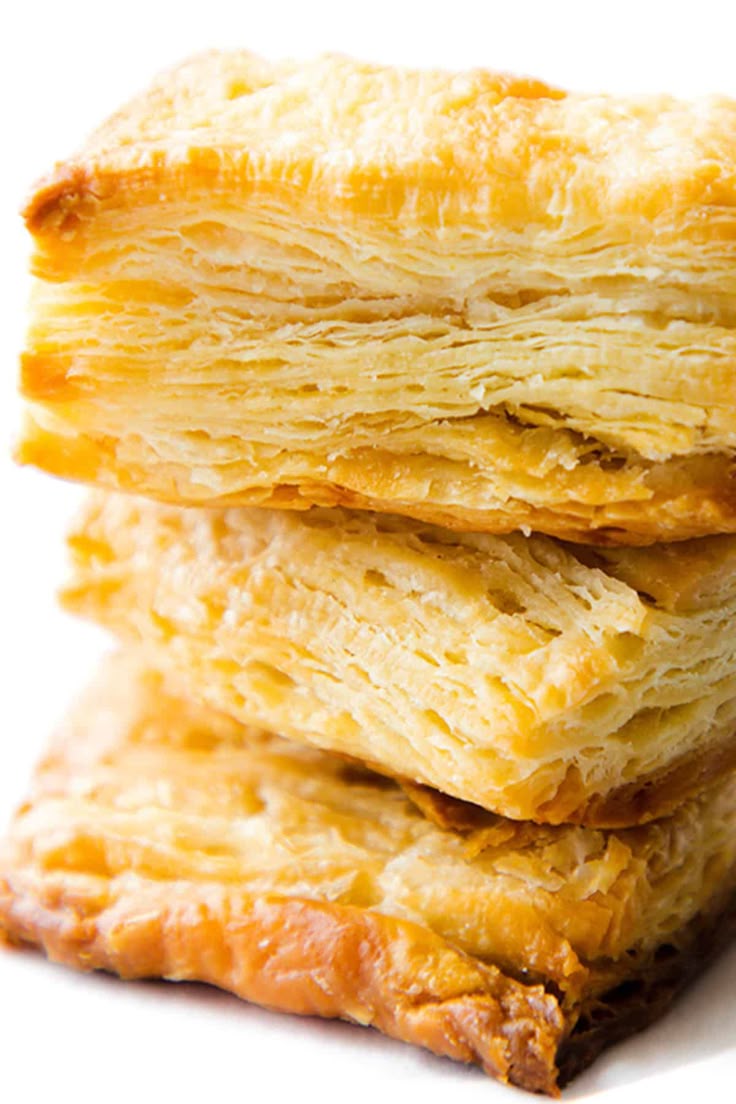
Forget the frozen puff pastry sheets! This homemade puff pastry is flaky, buttery and tender and is perfect to use in your favorite dessert pastries or something savory like sausage puffs! This extensive tutorial walks you through all of the steps on how to make a classic puff pastry! 

Previous post
Next post

Hope Romeo's Puff Pastry

Hope Romeo

Servings

2 pounds

Prep Time

2.5 minutes

Category

Baking

Forget frozen puff pastry sheets. This homemade puff pastry is flaky, buttery and tender; perfect to use in your favorite desserts or something savory like baked brie! While the process of making puff pastry can seem intimidating, this extensive tutorial gives you easy-to-follow, step-by-step instructions, resulting in a perfect puffed pastry. 

Hope Romeo's Puff Pastry

Ingredients

    blank

    • 1 lb 1 oz (3 ¾ cups) AP flour

    • 2 ounces butter (at room temperature)

    • 2 teaspoons salt

    • 1 tablespoon sugar

    • 9.5 ounces cold water

    blank

    • 1 lb butter (at room temperature)

    • ½ cup AP flour

    blank

    • Stand Mixer

    • Tapered rolling pin

    Directions

      blank

      1. In a stand mixer: combine flour, salt and sugar.

      2. Add 2 oz of butter, cut into small pieces. Work into flour by hand, just to start to break the butter into smaller pieces (pea — thumbnail sized).

      3. Create a well, you should be able to see a bit of the bottom of the mixing bowl, pour in the water. Use a spatula to begin combining. The dough should be dry, but shaggy.

      4. Using the dough hook, mix on low speed for 2 minutes, pausing once to scrape dry bits off the sides and bottom of the bowl. Then Mix on medium speed for 1 min. The dough should be smooth, but not sticky.

      5. Shape the dough into a flat square, wrap in plastic wrap. Rest at room temperature for 10 min. Move to the refrigerator, rest for at least 30 min.

      blank

      1. While the dough is resting, create the butter block. In your stand mixer, add 1 pound room temperature butter and ½ cup flour. Mix on low, scraping the paddle and bowl periodically. You should end up with a smooth mixture that is not aerated.

      2. Place butter mix in the center of a large piece of parchment. Create an “envelope” around the butter, that forms an 8 inch x 8 inch square.

      3. Using a rolling pin to press the butter into the corners and flatten out into a flat square that is even in thickness throughout. Place in the refrigerator to cool for 20-30 minutes.

      4. When it is ready to use: the butter block should be cool and firm, but flexible. You should be able to easily leave a finger imprint, but the butter shouldn’t be squishy.

      blank

      1. Once your butter block and dough are done cooling/resting, it’s time to combine the two! Begin by sprinkling a light dusting of flour on your counter.

      2. Maintaining the rectangular shape, roll out your dough to be just under ½ inch thick, 8 inches wide, by 16 inches long. Your goal is to have the same width as the butter but twice as long.

      3. Once you roll the dough to the proper dimensions, place your butter block in the center of the dough. Fold the dough up to cover the butter, meeting in the middle, overlap the ends just slightly. Then use your rolling pin to tack the ends together.

      4. Use your fingers to gently pinch the open top and bottom of the dough together around the butter block. Take care not to build up the extra dough along the edges.

      5. Turn the dough so the ends that you just pinch sealed are at the top and bottom of the dough, and the seam is vertical. Take a paring knife and score the sides, this allows the butter to “relax” within the dough.

      blank

      1. Loosely grip the tapered ends of your rolling pin: firmly but with care, roll forward while pushing down. Continue this motion from the end of the dough closest to you all the way to the other end.

      2. Repeat this process, continuing to be gentle, smoothing out the ridges created by the first pass with the rolling pin. 

      3. Continue to roll out the dough till you have a long rectangle that is even in thickness and in width. Your final dimensions should be 8 inches wide, by 24 inches long, and less than ½ inch thick.

      blank

      1. Fold the edges of the dough together, meeting a couple inches to the right or left of center. (You now have 2 layers of butter). Fold in half, creating a “book” (you now have 4 layers of butter).

      2. Use your rolling pin to gently tack the layers together, and ensure that you have even thickness throughout, for consistent cooling.

      3. Wrap in plastic wrap, rest in the refrigerator for 15 minutes.

      blank

      1. Turn your dough 90 degrees from how you were rolling it out the last time. The “pages” of your “book” should be facing to the right, not the top or bottom.

      2. Roll your dough out into a long rectangle again, using the butter walking out method to start. The continuing to roll oout till smooth and even thickness. The final dimensions should be 8 inches wide, 24 inches long and about ½ inch thick

      3. Fold the dough into thirds, like a letter going into an envelope. Gently roll to tack dough together and to ensure consistent thickness. Re-wrap in the same plastic wrap, rest in the refrigerator for 15 minutes.

      blank

      1. Follow above directions: turn the dough 90 degrees, so the ‘open’ ends of the dough ,where you can see the layers are at the top and bottom.

      2. Walk the dough out, then roll to 8 inches wide by 24 inches long. Fold into thirds, tack down and even out with a rolling pin. Cover and rest for 15 min.

      blank

      1. Follow above directions: turn dough 90 degrees, so the ‘pages’ are to the right. Walk the dough then roll to 8 inches wide by 24 inches long.

      2. Roll to tack down and even out with a rolling pin. Congrats! We have finished the dough. Cover and let rest for at least 1 hour in the refrigerator before using.

      blank

      1. Follow the recipe you are using, but typically you will roll the puff pastry out to be quite thin, typically no thicker than a ¼ inch thick.

      2. Bake at 375°- 425°F, depending on the recipe.