

Making sausage at home isn't as tricky as you'd think. If you follow these instructions, you'll end up with savory, well-spiced links. They're a great accompaniment to rice, mashed potaotes, or in a classic sausage and peppers sandwich!

Making sausage at home isn't as tricky as you'd think. If you follow these instructions, you'll end up with savory, well-spiced links. They're a great accompaniment to rice, mashed potaotes, or in a classic sausage and peppers sandwich!
Chef Jeremy Chernock
10
12 hours
20 minutes
German
Entrée
The trickiest part of this recipe is sourcing beef suet and sheep casings; both can be found at well-stocked meat markets near you. Also, you can purchase a meat grinder attachment for your mixer. Failing that, a food processor works.
Place the venison, guanciale, and suet on a rimmed baking sheet, transfer to the freezer, and chill until crunchy on the exterior but not frozen solid, roughly 30-60 minutes. We call this “open freezing.”
In a small bowl, add gin, ice water, salt, parsley, sage, black pepper, and juniper berries and stir to combine.
Nest a large mixing bowl in a bowl filled with ice. Grind the venison, guanciale, and suet through the small die of the grinder into the bowl set in ice. If you don’t have a meat grinder, pulse with a food processor.
Add the herb mixture to the meat and stir with your hands until well incorporated; the mixture will look homogenous and will begin sticking to the bowl.
Spoon 2 tablespoons of the meat mixture into a nonstick frying pan spread into a thin patty. Cook the test patty over low heat until cooked through but not browned. Taste the sausage for seasoning and adjust as necessary.
Press a sheet of parchment paper or plastic wrap directly on the surface of the meat to prevent oxidation, then cover the bowl tightly with plastic wrap and refrigerate overnight.
Alternatively, you can vacuum-seal the farce.
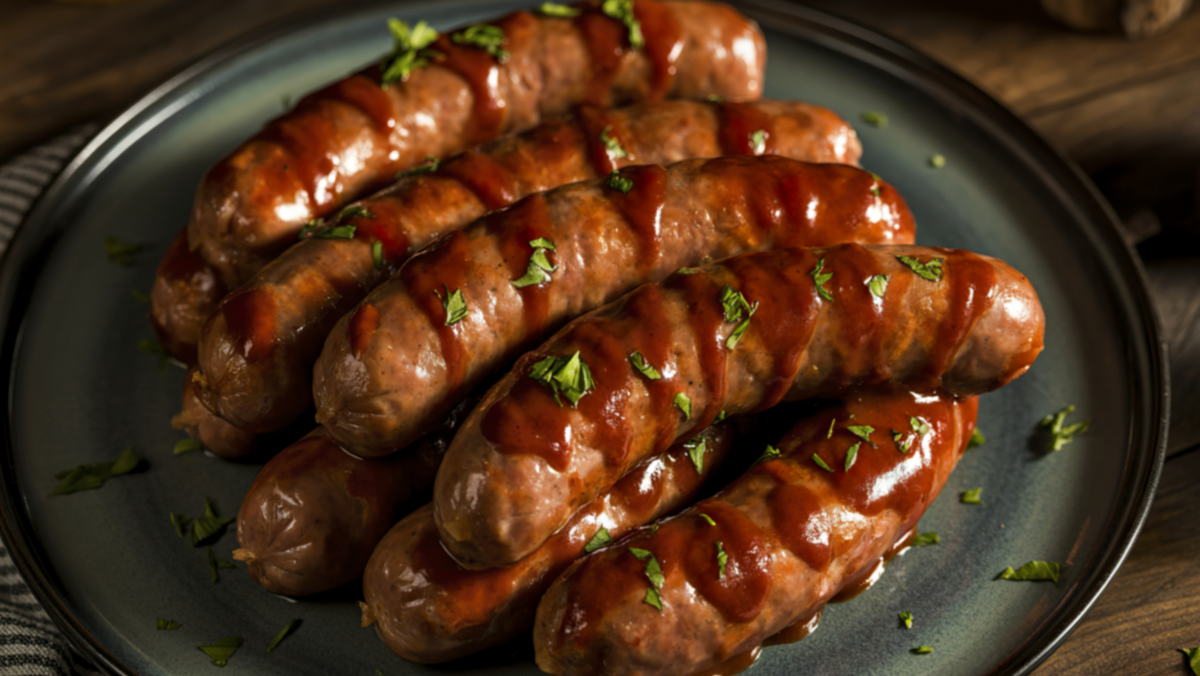
Stuff the sausage into the sheep casings and twist into links. These sausages are best grilled over indirect heat or pan fried over medium heat until they reach an internal temperature of 145°F. They can also be frozen.